
Magnesium vs. Melatonin: A Complete Guide to Better Sleep
May 19, 2026

You must have heard many people mentioning that they struggle to fall asleep or are unable to sleep for sufficient hours. Many of them take the help of one or another dietary supplement to get a good night’s sleep. Among various sleep support supplements available, melatonin and magnesium supplements lead the table due to their contribution in assisting with good sleep. But which one will work better for you? Well, it depends on multiple factors.
This blog covers the information about magnesium & melatonin, how both can help with sleep, and a detailed comparison of magnesium vs. melatonin. Read on to learn more about these potentially sleep-supporting components.
What is magnesium?
Magnesium is an essential mineral, which is important for various functions in the body, such as muscle & nerve functions, blood sugar and blood pressure regulation, heart rhythm consistency, and other functions.
Talking about magnesium for sleep, studies conducted by various organizations across the world suggest that magnesium may also help with supporting a healthy sleep schedule and quality sleep.
What is melatonin?
Melatonin is a hormone produced naturally by the pineal gland in the brain. Often referred to as ‘sleep hormone’, it is naturally produced in your body nightly in anticipation of sleep. Melatonin also works as an antioxidant, and may help support immune function, protect the body against cellular damage, and regulate blood pressure.
When considering the importance of melatonin for sleep, it plays a role in controlling the body’s sleep-wake cycle (circadian rhythm), and may help initiate sleep as well as support sleep quality.
Magnesium and melatonin: Effect on sleep
Various studies suggest that both melatonin and magnesium may work as natural sleep aids. However, the mechanisms of action are different for both, and so they may help address different sleep issues.
Magnesium’s effect on sleep:
· Activates gamma-aminobutyric acid (GABA), a neurotransmitter that calms the brain and helps the body wind down.
· May help relieve stress and provide relaxation support.
· Lowers cortisol (a stress hormone) levels and may help calm the nervous system, thus supporting sleep.
Melatonin’s effect on sleep:
· Helps regulate the body’s internal clock (circadian rhythm).
· May work as an antioxidant and help manage diseases that can affect sleep.
· May help people with sleep-wake disorders, like narcolepsy (a condition that causes sudden daytime drowsiness).
Comparing magnesium and melatonin
While a variety of both melatonin and magnesium supplements are available, here is a comparative analysis of both of them to help you select the one that will work for you:
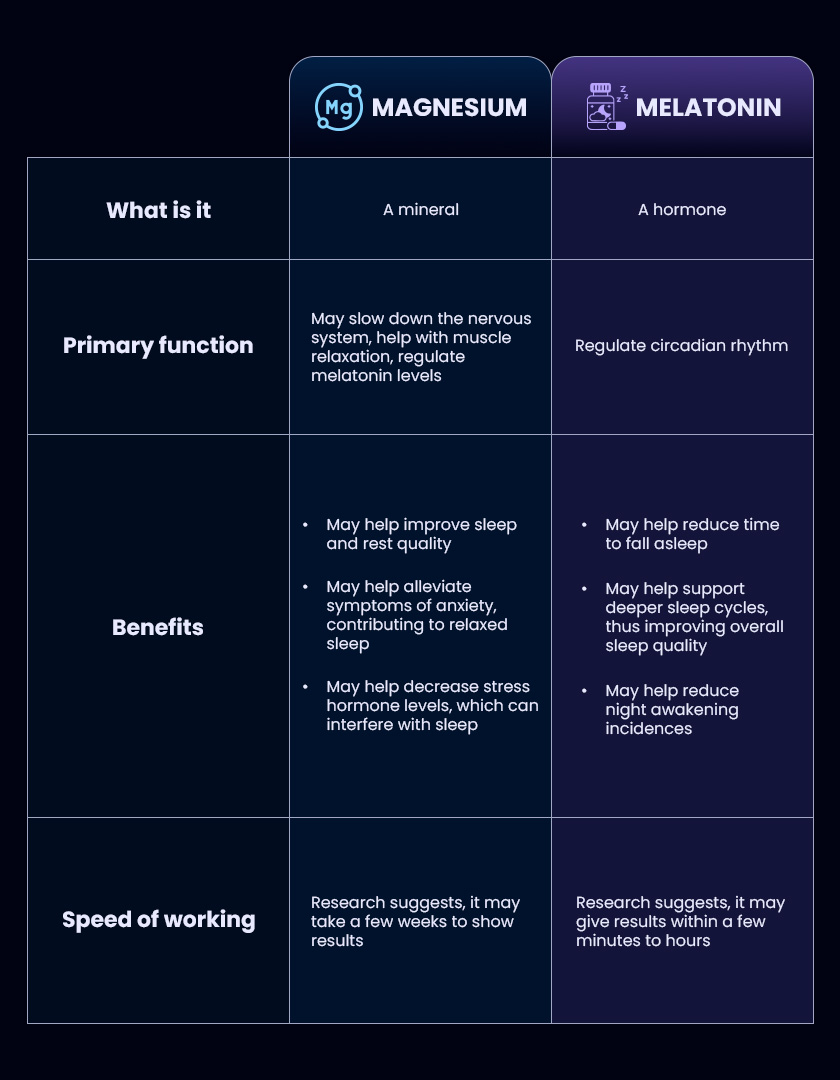
How to select one?
Though the working of melatonin and magnesium is different, multiple studies suggest that both may help improve sleep. But the selection of a magnesium or melatonin supplement depends on the following factors:
· Type of sleep issue: If you are facing circadian rhythm disruptions or delayed sleep phase, due to jet lag, general insomnia, or shift work disorder, melatonin may be more effective. But if you are experiencing anxiety or stress-related sleep disturbances, magnesium may work as a better option.
· Onset time: If a quicker effect is the goal, melatonin may work better. Whereas, magnesium would be a better choice when it is alright if the effects are seen in a few weeks.
· Length of use: Melatonin intake is generally recommended for short-term needs, while magnesium may be recommended as a long-term supplement to support overall wellness (along with sleep support).
How to improve sleep naturally?
While melatonin or magnesium supplements may assist with sleep support, here are some ways in which you can naturally improve sleep:
· Maintain a bedtime routine: Go to bed and get up at the same time every day.
· Avoid caffeine intake at least 8 hours before bedtime.
· Maintain a cool temperature in the bedroom. Keep the lights off in the room, as your brain makes more melatonin when it gets dark.
· Stop using electronics (avoid screens) at least 30 minutes before bedtime.
· Maintain a balanced and healthy diet. Avoid heavy meals right before bedtime.
Frequently asked questions
Here are answers to some of the common questions regarding melatonin and magnesium:
Q. How much magnesium or melatonin should I take for sleep?
A. Based on age, sex, and pregnancy status, the recommended daily magnesium intake may fall between 310 and 420 milligrams for adults. Melatonin intake may be up to 8 milligrams for up to 6 months in adults. However, these are general suggestions, and it is strongly advisable to consult a healthcare professional before starting to use any supplement.
Q. Can I take magnesium and melatonin together?
A. While there may be synergistic benefits of using magnesium and melatonin together, it is required to consult a healthcare professional before using them in combination to ensure safety and appropriate dosage.
Q. What are the best food sources of melatonin and magnesium?
A. Foods with higher magnesium content, include nuts, whole grains, soy products, leafy greens, dairy products, etc. Whereas, melatonin-containing foods include nuts, rice, eggs, salmon, grapes, etc.
Q. Is it safe to take melatonin every day?
A. Melatonin is intended for short-term use. For long-term use, please consult a healthcare professional to avoid affecting the body’s natural melatonin production.
Quick facts
· Melatonin, a hormone, may help maintain the sleep-wake cycle
· Magnesium, a mineral, may help support relaxation for better sleep
· Melatonin may work faster, and magnesium may take weeks to show results
· Avoiding screen time and caffeine at night can provide natural sleep support
· Neither supplement is the only solution for good sleep, consulting a healthcare professional is a must for their safe use
Parting notes
Both magnesium and melatonin supplements are popular for sleep support. While most clinical trials on magnesium and melatonin have been conducted internationally, with limited Australia-specific data available, the worldwide results often indicate that these supplements may be beneficial for sleep quality. However, there is no universal ‘better’ between the two. Consider your requirements and your doctor’s advice while selecting the one. Check out the extensive collection of the best supplements in Australia available at healthsupplements.com.au and order all that you need to support your health.
Disclaimer: This blog is for informational purposes only and not medical advice. If you have health conditions or take medication(s), talk to a healthcare professional before starting to take new supplements.