

7 Essential Post-Workout Recovery Steps Every Aussie Should Follow
Apr 15, 2026

All of us have already planned our gym session or Pilates class before or after work. But why is nobody talking about the stiffness or low energy after those workouts? We put a lot of planning into our daily workout routine, but how well do you plan for post-workout recovery?
The problem is that if you can’t recover from your intense workouts, you’re likely to lose steam or even your patience. Already guilty? Let us help you.
Here are 7 essential post-workout recovery steps that anyone can follow to get back to consistent workouts with greater vigour.
1. Cool Down Properly
Cooling down after exercise may be the last thing you want to do, but it is the first step of recovery. Spend 5–10 minutes doing light stretching, slow jogging, cycling, or a brisk walk to ease muscle tightness and gradually lower your heart rate.
Some people also find that cold showers may help relieve stiffness after workouts.
2. Stay Hydrated
Rehydration is crucial after exercise, as your body loses fluids through sweat. Even mild dehydration may slow muscle recovery. Water should always be your first choice.
You can also include:
- Coconut water
- Electrolyte drinks
- Hydration powders
These may help replenish lost minerals and support recovery. However, nothing replaces proper water intake, so drink plenty of it.
3. Refuel with Balanced Nutrition
A balanced post-workout meal is essential for recovery. Your body needs:
- Protein to repair muscles
- Carbohydrates to restore glycogen
- Healthy fats for overall recovery
Eating within two hours of exercise may support muscle recovery. Including anti-inflammatory foods like berries, leafy greens, and omega-3-rich foods may also help your body recover naturally.
4. Have Enough Sleep
Sleep is one of the most underrated recovery tools. Poor sleep can negatively impact your workout performance and recovery.
To improve sleep quality:
- Follow a consistent bedtime routine
- Do light stretching before bed
- Avoid heavy meals before sleeping
- Limit caffeine intake at night
Aim for 7–8 hours of sleep daily. If not possible, short naps during the day may help your body recover faster.
5. Improve Circulation & Muscle Relief
Blood flow plays a key role in recovery. Sitting for long periods after exercise may cause stiffness.
You can improve circulation by:
- Getting a massage
- Using a foam roller
- Wearing compression gear
These methods may help reduce muscle soreness, improve circulation, and support recovery.
6. Manage Stress Levels
Chronic stress can slow down recovery and impact overall health. High stress levels may keep your body in a constant state of tension.
Try these simple stress-management techniques:
- 5-minute breathing exercises
- Meditation
- Taking “me time”
- Scheduling proper rest days
7. Have Active Recovery Days
Active recovery involves low-intensity exercises on rest days, such as:
- Walking
- Light cycling
- Swimming
- Yoga
These activities help improve circulation, reduce soreness, and prevent burnout while allowing your body to rebuild.
Post-Workout Recovery Supplements
Some individuals include post-workout recovery supplements in their routine when training intensity increases or recovery feels slow. Common options include:
- Whey Protein
- Electrolyte Hydration Mix
- Magnesium Supplement
- Omega-3 Capsules
- Creatine Supplement
Always consult a healthcare professional before starting any new supplements.
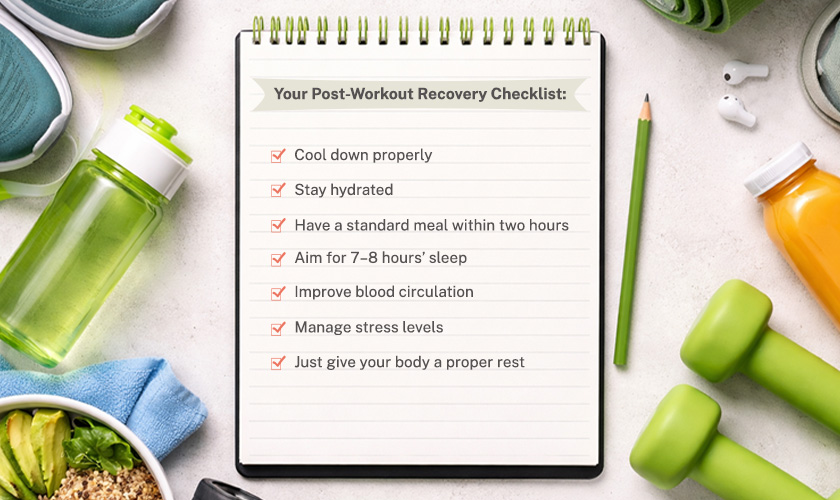
Your Post-Workout Recovery Checklist
Wrapping Up
Don’t push yourself too hard during workouts. Recovery is an essential part of your fitness journey. Taking care of your body after exercise is just as important as the workout itself.
Prioritise proper nutrition, hydration, sleep, and smart recovery habits to come back stronger and more energetic. Start implementing these recovery tips after your next workout and feel the difference.
Frequently Asked Questions
1. How long does post-workout soreness usually last?
If it's mild, it should go away after 24 to 72 hours. If it's lingering, it could be a sign that your body needs more recovery.
2. Do I need protein after every workout?
Not always, especially if it's a light workout and you're having regular meals.
3. Is it safe to work out when sore?
You can still work out lightly if you're sore. If it hurts a lot or gets worse, it's a sign to stop.
4. Does stress really impact recovery?
Stress can impact how well and how quickly you're able to recover and get back into a workout routine.