
The No-Pressure Guide to 8 Exercises That May Help in Reducing Joint Pain
Feb 17, 2026

As we age, joint pain has a way of creeping into our everyday lives. For many people, it’s a bit of stiffness in the morning, knees that complain on the stairs, or hips that feel tight after a long day sitting. Over time, you start adjusting how you move without even realising it. That’s often the moment people begin looking for practical, safe ways to stay active without making things worse.
In this guide, we will help you understand what’s happening in your joints, what signs to pay attention to, and how to build a sustainable routine with 8 exercises forjoint pain. Not an intense workout. Not anything extreme. Just steady, low-impact movement that may support the body rather than stressing it.
Why Gentle Movement is Important When Your Joints Feel Stiff
It might seem counterintuitive, but avoiding movement altogether can make joints feel stiffer and weaker over time. Joints rely on regular, gentle motion to stay mobile. Muscles around them act like a support system; the stronger and more active they are, the less strain the joint itself has to carry.
Health organisations such as Arthritis Australia regularly emphasise that regular low-impact activity may help improve joint function, support muscle strength, and reduce stiffness. The key word is regular. Small, regular efforts usually work better than occasional bursts of activity. This doesn’t mean pushing through pain, but actually finding a rhythm that keeps you moving while respecting your limits.
Common Symptoms People Notice First
- Stiffness when getting out of bed or after sitting
- Swelling or tenderness around a joint
- A dull ache during or after movement
- A feeling of tightness when bending or turning
- Reduced strength, especially in knees or shoulders
- Weakness in nearby muscles
If these symptoms are persistent or slowly worsening, it’s worth having a conversation with a healthcare professional. A physiotherapist can help customise a safe plan based on your condition, fitness level, and lifestyle.
Who May Benefit from a Joint Pain Exercise Routine
A gentle, structured approach to movement is not just for people with diagnosed arthritis. It can help a wide range of people maintain comfort and mobility.
This type of joint pain exercise routine may suit:
- Senior and older adults noticing age-related stiffness
- People with early arthritis or mild joint degeneration
- Anyone recovering from minor joint strains
- People who sit most of the day and feel stiff
- Those wanting to support long-term joint health
- Anyone experiencing occasional knee, hip, or shoulder discomfort
Even if pain is occasional rather than constant, building strength around the joints can make daily movement feel easier.
8 Safe Exercises for Joint Pain
1# Walking
A simple starting point. Walking keeps joints moving without heavy impact. Even a short daily walk can help keep the joints moving, improve circulation, and reduce stiffness over time. Start slow, wear supportive shoes, and gradually increase your distance.
2# Swimming
Being in a warm water pool supports body weight and reduces pressure on joints while still allowing your muscles and nerves to relax.That’s why many people with joint discomfort feel more confident about aquatic exercise than land-based exercise.
3# Cycling
Stationary cycling can be a good option if outdoor cycling feels unstable. It is a great way to strengthen leg muscles and improve cardiovascular health without joint stress. This one lets you control the pace and resistance, making it easier to stay comfortable.
4# Gentle Stretching
Slow, gentle stretching may reduce that tight feeling after sitting too long. Just simple daily stretches for the legs, hips, and back can increase blood flow, improve your posture, and combat fatigue.
5# Seated Leg Raises
This one is a simple strength exercise that gently works the muscles around the knees without putting weight on the joint. Sit upright in a chair, slowly lift one leg until it’s straight, hold for a few seconds, and lower it back down. It may reduce strain during everyday movement like walking, standing up, or climbing stairs.
6# Wall Sits
Wall sits help strengthen the thighs and reduce knee pain. Lean against a wall and slide down slightly into a partial sitting position. Hold for a few seconds, and then come back up. You can make the exercise more difficult by going deeper and holding it longer.
7# Tai Chi
These gentle, flowing movements are often considered safelow-impact exercises for arthritis because they improve muscular strength, flexibility and fitness. Many people with joint pain like this, as it feels very calming and doesn’t involve any sudden or high-impact motion.
8# Calf Raises
Just hold onto a chair or wall for balance, slowly lift your heels and lower them again. This exercise supports ankle stability and lower-leg strength, which can make everyday walking feel steadier.
Support from Nutrition and Joint Supplements
Exercise does most of the heavy lifting when it comes to joint support, but nutrition can play a supportive role, too. Some people explore joint health supplements alongside their workout, especially when discussed with a healthcare professional. Such as,
- Omega-3 Supplements
- Glucosamine and Chondroitin Supplements
- Magnesium Supplements
Explore suitable options for joint, bone, and muscle supplements
Always check with your doctor before you try any new supplements to make sure it’s right for you and that you’re taking a safe dose.
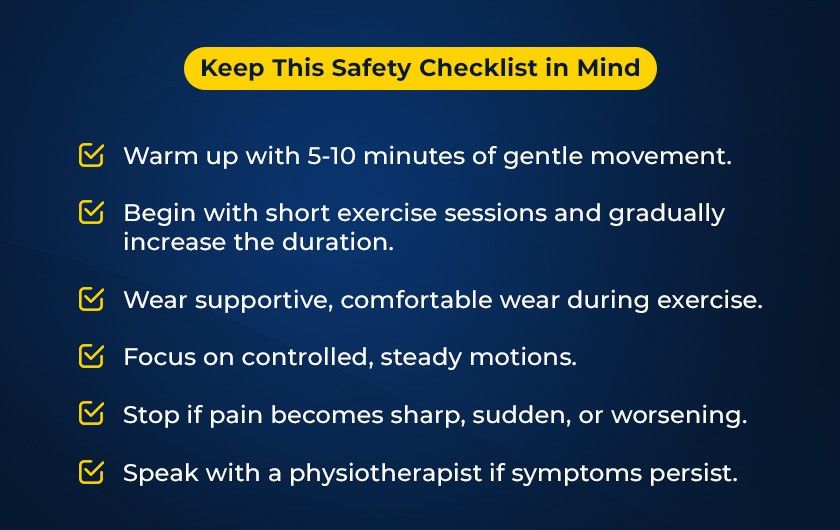
Keep This Safety Checklist in Mind
Let’s Wrap This Up
Some days your joints will feel fine. Other days, even small movements might feel heavy, and that’s normal. The goal is to keep your body moving so it doesn’t stiffen up more over time. Start with small things, and stay consistent. Don’t ever hesitate to check in with physio if something doesn’t feel right. A sensible and steady routine with these 8exercisesmay help you stay mobile and more comfortable in your day-to-day life.
FAQs
Q. What exercises are safe for joint pain?
A. Low-impact activities like walking, cycling, gentle strength work, swimming, and mobility exercises are generally safe when started gradually and adjusted to your comfort level.
Q. Will exercise worsen arthritis?
A. When done correctly and progressed slowly, movement usually reduces pain and improves joint function. Sudden, high-impact activity may aggravate symptoms, so it’s best to build up carefully.
Q. How often should I exercise?
A. Short sessions, like three to five times a week, often work well. A mix of gentle cardio, strengthening, and flexibility tends to support joints without overloading them.
Q. Should I stop if I feel pain while exercising?
A. Mild muscle soreness can happen, especially at the start. Sharp, increasing, or lingering joint pain is a sign to stop and seek advice.